Possible INQOVI side effects and how to manage them
Side Effects
What are the possible side effects of INQOVI treatment?
You may experience side effects while taking INQOVI
The most common ones include:
- Low white blood cell counts (leukopenia, lymphocytopenia,* and neutropenia)
- Low platelet counts in the blood (thrombocytopenia)
- Low red blood cell counts (anemia)
- Tiredness
- Constipation
- Bleeding
- Muscle pain
- Mouth or throat pain or sores
- Joint pain
- Nausea
- Shortness of breath
- Diarrhea
- Rash
- Dizziness
- Feeling lightheaded*
- Fever with low white blood cell counts (febrile neutropenia)
- Arm or leg swelling
- Decreased appetite
- Pneumonia
- Changes in liver function tests
- Infection*
- Sepsis*
- Abnormal heart rhythm*
- Stomach-area (abdomen) pain*
- Decreased kidney function*
- Headache†
- Cough†
- Upper respiratory tract infection†
*Only those taking INQOVI plus venetoclax for AML reported these side effects.
†Only those taking INQOVI for MDS reported these side effects.
These are not all the possible side effects of INQOVI. If you do experience side effects, please consider reporting them to the FDA at fda.gov/medwatch or 1‑800‑FDA‑1088.

If you experience side effects
While side effects may happen during treatment, they can vary from one person to another. It is important to tell your healthcare team about any side effects you experience while taking INQOVI so they can help you manage them.
If you experience certain side effects, your healthcare team may tell you to:
- Take INQOVI for fewer days each cycle
- Take a break from INQOVI for a little while
- Stop taking INQOVI completely
To find out about possible side effects with venetoclax, please see venetoclax Prescribing Information.
Tips for managing common side effects
Your healthcare provider may have ways to help manage certain side effects of INQOVI, such as adjusting or delaying your dosing cycle. The following information, along with your healthcare provider's care, may also be helpful to you in managing some of the common side effects of INQOVI.
This information is not meant to replace your healthcare provider's advice. Always discuss any side effects with your healthcare provider
Tiredness or weakness
- Stress and anxiety may increase feelings of tiredness. You can try meditation or yoga to relax and release stress
- Eat a balanced diet and drink fluids throughout the day to stay hydrated
- Plan time to rest throughout the day, and consider taking short naps
- Don't try to do too much. Ask for help with activities that require a lot of energy
- Try to stay active with short walks or other low-effort exercise
- Try to get at least 8 hours of sleep every night. Consider making a bedtime routine to relax before bed
- Try keeping a diary of how you feel each day. You can share this with your healthcare provider or nurse to keep track of your energy levels
- Talk to your healthcare provider. They may prescribe medication that can help decrease tiredness
Nausea or vomiting
- You may feel nauseous on the days you take INQOVI tablets or shortly after
- It may help to avoid certain foods. Try eating bland, easy-to-digest foods like crackers or toast instead of greasy, fried, or spicy foods
- Avoid strong smells. Go outside and get a breath of fresh air if you feel like vomiting
- Eat smaller meals throughout the day instead of 3 large ones. Eat food at room temperature
- Talk to your healthcare provider, who may prescribe medicine to help reduce nausea
Constipation
- Talk to a healthcare provider if you have not had a bowel movement in 2 days
- Keep a record of your bowel movements so that you can discuss with your healthcare provider what is normal for you
- Talk to your healthcare provider about high-fiber foods you can eat. Some examples are bran muffins, cooked peas and beans, and peanut butter
- Stay hydrated. Drink at least 8 cups of water or other fluids each day
- Drink warm fluids like tea. Fruit juice, such as prune juice, may also help
- Be active when you can. Ask your healthcare provider about ways to exercise while taking INQOVI
Diarrhea
- Talk to your healthcare provider if:
- Your diarrhea lasts for more than 24 hours
- You experience pain along with diarrhea
- Your rectal area is sore or bleeds
- Your healthcare provider may prescribe medication to help. Do not take medicine for diarrhea before talking to a doctor or nurse
- Eat smaller meals throughout the day instead of 3 large ones
- Ask your healthcare provider about foods high in sodium and potassium. Your body can lose these minerals when you have diarrhea, and it's important to replace them
- Eat low-fiber foods such as bananas, white rice, white toast, and plain or vanilla yogurt
- Drink 8 to 12 cups of clear liquids each day, such as water or clear broth. Liquids containing electrolytes can be helpful
- Drink liquids slowly and at room temperature
Fever
- You may have fever if you:
- Feel very warm or cold
- Have a headache or body aches
- Have shaking chills
- Have a skin rash or a new area of redness or swelling
- Have a new cough or shortness of breath
- Have a sore throat
- Have new belly pain
- Feel burning or pain while urinating
- Have pus coming from an injury or other location
- Feel confused or forgetful
- Call your healthcare provider immediately if you have a fever or other signs of infection, such as chills, body aches, or bruising more easily than usual
- To see if you have a fever, you can check your temperature by mouth. If you can't use this method, hold the thermometer under your armpit
- Your healthcare provider may tell you to contact them if your temperature reaches 100.5° F (38° C) or higher
- A fever can cause fluid loss and dehydration. Drink plenty of liquids, like water, juice, and soup
- Get enough rest
- Keep cool by using a cold compress on your forehead
- Your healthcare provider may prescribe medicine to help reduce fever. Do not take fever medicine without talking to your healthcare provider
Shortness of breath
- Call your healthcare provider if you cough up blood or colored mucus, experience chest pain, or have trouble speaking
- Avoid smoking, secondhand smoke, and allergens like dust and pet dander
- Check and replace filters in your heating and cooling systems. Home air purifiers can make you more comfortable, too
- You can try mindfulness and relaxation strategies; even listening to music, watching TV, or reading can help
- Ask your healthcare provider if there are medicines or treatments that might relieve your symptoms
Decreased appetite
- Eat small meals throughout the day instead of 3 large ones
- Set a daily schedule for meals, and eat even if you do not feel hungry
- Drink liquid foods such as soup or smoothies if you do not feel like eating solid foods
- Choose foods that are high in calories and/or protein
- Use plastic forks or spoons if you get a metallic taste in your mouth
- Being active may help you feel hungrier. Talk to your healthcare provider about exercises that can help
- Talk to your healthcare provider, who may suggest that you take extra vitamins or supplements
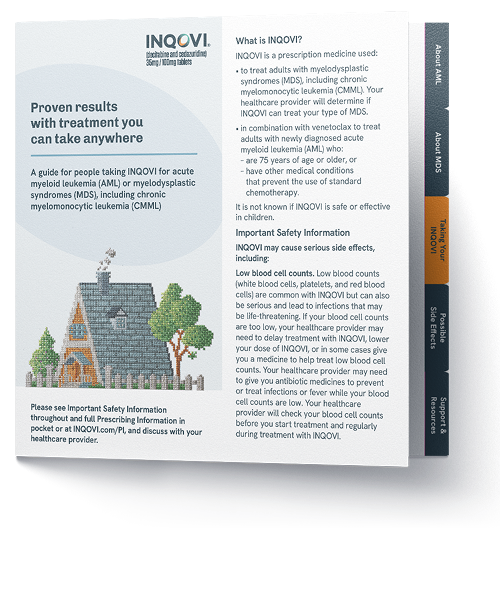
A helpful guide to INQOVI treatment
Download the Patient and Caregiver Brochure
Whether you are living with or caring for someone with AML or MDS, including CMML, this guide explains how INQOVI can help.

Support and Resources
Download helpful resources for managing treatment and find links to AML and MDS advocacy groups.
Taking INQOVI
Learn about taking and tracking INQOVI for AML and MDS, including CMML.