MDS and CMML overview and risk factors
About MDS and CMML
What is MDS, including CMML?
Myelodysplastic syndromes (MDS) are a group of blood cancers that start in the bone marrow—the part of the body that makes blood cells. In MDS, the bone marrow does not make enough healthy blood cells, or it makes cells that do not work the way they should.
Chronic myelomonocytic leukemia (CMML) is a blood cancer that also starts in the bone marrow. Like MDS in some ways, CMML does not make enough healthy blood cells. But it also makes too many of a certain type of white blood cell.
The changes caused by MDS or CMML can lower your body’s ability to fight infections, carry oxygen, or control bleeding.
MDS, including CMML, is a rare blood cancer. Each year around 10,000 people in the United States are diagnosed, though estimates vary. Some people may not need treatment for years, while others may need it sooner.

Learn about INQOVI for MDS, including CMML
What are some of the known risk factors for MDS?
A risk factor is something that may increase the chance of developing a disease, such as cancer. Having one or more risk factors does not mean you will get the disease, and some people who do develop it may not have any known risk factors.
Because CMML is rare and was grouped with MDS for many years, fewer risk factors are known for CMML. While the known risk factors for CMML include older age, male sex, and prior cancer treatment, these are the known risk factors for MDS:
- Age: MDS is uncommon before age 50 and is most often diagnosed in people over 70 years old
- Sex: MDS is more common in men than in women. The reason isn’t clear, though it may relate to past exposures such as smoking or certain workplace chemicals
- Previous cancer treatment: People who have received chemotherapy or radiation therapy for another cancer have a higher risk of developing MDS later. This is known as treatment-related or secondary MDS
- Smoking: Smoking increases MDS risk. Cancer-causing substances from tobacco smoke enter the bloodstream and can damage cells throughout the body
- Radiation and chemical exposure: High-dose radiation exposure or long-term exposure to chemicals such as benzene can raise the risk of MDS. These exposures may occur in certain industrial or agricultural workplaces
- Inherited or genetic conditions: Some rare inherited syndromes—such as Fanconi anemia, Down syndrome, Shwachman-Diamond syndrome, and others—can increase the chance of developing MDS
- Family history: MDS occurs more often than would be expected in families, even when no specific genetic syndrome is known
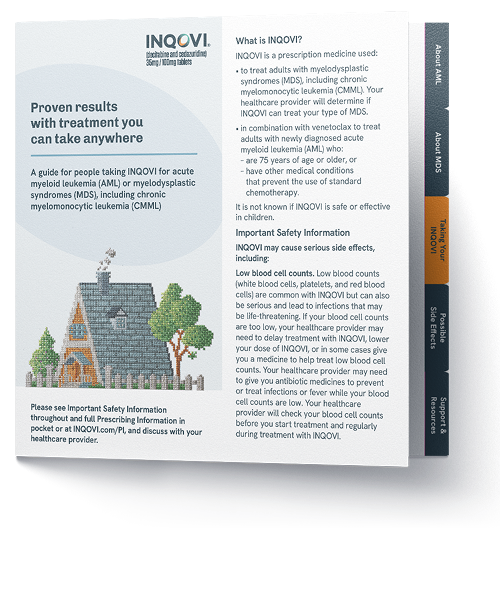
A helpful guide to INQOVI treatment
Download the Patient and Caregiver Brochure
Whether you are living with or caring for someone with AML or MDS, including CMML, this guide explains how INQOVI can help.

INQOVI for MDS, including CMML
Learn about how this medicine works and clinical trial results.

Support and Resources
Download helpful resources for managing treatment and find links to AML and MDS advocacy groups.