AML overview and risk factors
About AML
What is AML?
Acute myeloid leukemia (AML) is a type of blood cancer that starts in the bone marrow—the part of the body that makes blood cells. In AML, the bone marrow makes too many white blood cells that have not fully developed and therefore do not work properly. These unhealthy cells build up and leave less room for healthy cells.
The changes caused by AML can lower your body’s ability to fight infections, carry oxygen, or control bleeding.
AML is a rare blood cancer, but you are not alone. Each year, about 22,000 people in the United States are diagnosed with the condition. Because it progresses quickly, doctors often recommend starting treatment as soon as possible.

Learn about INQOVI plus venetoclax for AML
What are some of the known risk factors for AML?
A risk factor is something that may increase the chance of developing a disease, such as cancer. Having one or more risk factors does not mean you will get the disease, and some people who do develop it may not have any known risk factors.
Anyone can develop AML, but these factors may make it more likely:
- Age: AML can occur at any age but is more common in older adults
- Sex: AML occurs slightly more often in men than in women for reasons that are not well understood
- Previous cancer treatment: People treated with certain chemotherapy drugs or radiation therapy for another cancer are at increased risk for AML. This risk can appear years after treatment
- Smoking: Smoking is the only proven lifestyle-related risk factor for AML. Harmful substances from tobacco smoke can travel through the bloodstream and damage bone marrow cells
- Radiation and chemical exposure: High levels of radiation or long-term exposure to chemicals such as benzene increase the risk of AML. Workplace exposure to formaldehyde has also been linked to the disease
- Inherited or genetic conditions: Some inherited conditions—such as Fanconi anemia, Down syndrome, Li-Fraumeni syndrome, and others—can increase AML risk
- Family history: Although most cases of AML are not thought to have a strong genetic link, having a close relative (such as a parent, brother, or sister) with AML can increase your risk
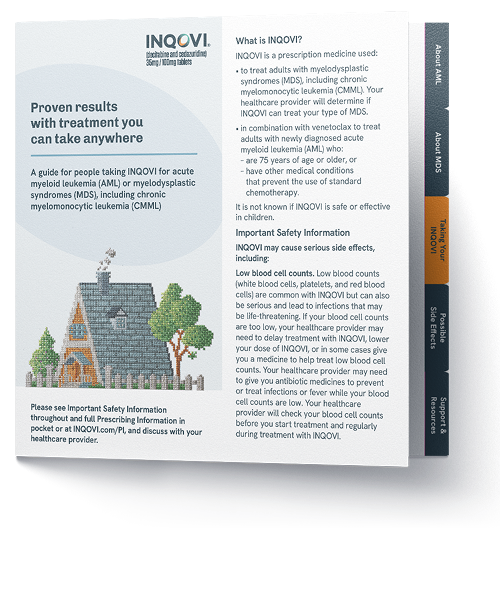
A helpful guide to INQOVI treatment
Download the Patient and Caregiver Brochure
Whether you are living with or caring for someone with AML or MDS, including CMML, this guide explains how INQOVI can help.

INQOVI plus venetoclax for AML
Learn about how these medicines work and clinical trial results.

Support and Resources
Download helpful resources for managing treatment and find links to AML and MDS advocacy groups.